Inhaltsverzeichnis
Frazier & Son Bucket Elevators and Incline Conveyors save valuable plant real estate with a minimal footprint. Our innovative designs and robust sanitary construction allows fragile products to be handled with minimal product degradation. Our designs include the latest safety options like safety interlocking switches and two-hand jog stations. Contrarily, bucket conveyors move loads at an acute diagonal angle and are more similar to vertical conveyors.
- They can run up to 350 feet per minute and have a capacity of up to 100 pounds per cubic foot.
- A belt conveyor is a system designed to transport or move physical items like materials, goods, even people from one point to another.
- The head pulley, which bends to suit the pulley, must have a strong slide lagging.
- A 12-inch wide heavy-duty belt in this sand model ejects the material, in this case, out the left side.
GSI Bucket Elevator heads are built to provide years of reliable service and give you the customization you need. Our head construction features a 2-piece design to allow for interior accessibility. Our full-radius contoured head minimizes wear and improves material flow while multiple liner options ensure your machine is designed specifically to your conditions. Belt bucket elevators offer cost-effective handling for lighter-duty jobs. Buckets are mounted onto a belt made of various compounds depending on the application. A bucket elevator can elevate a variety of bulk materials from light to heavy and from fine to large lumps.
Belt Conveyors
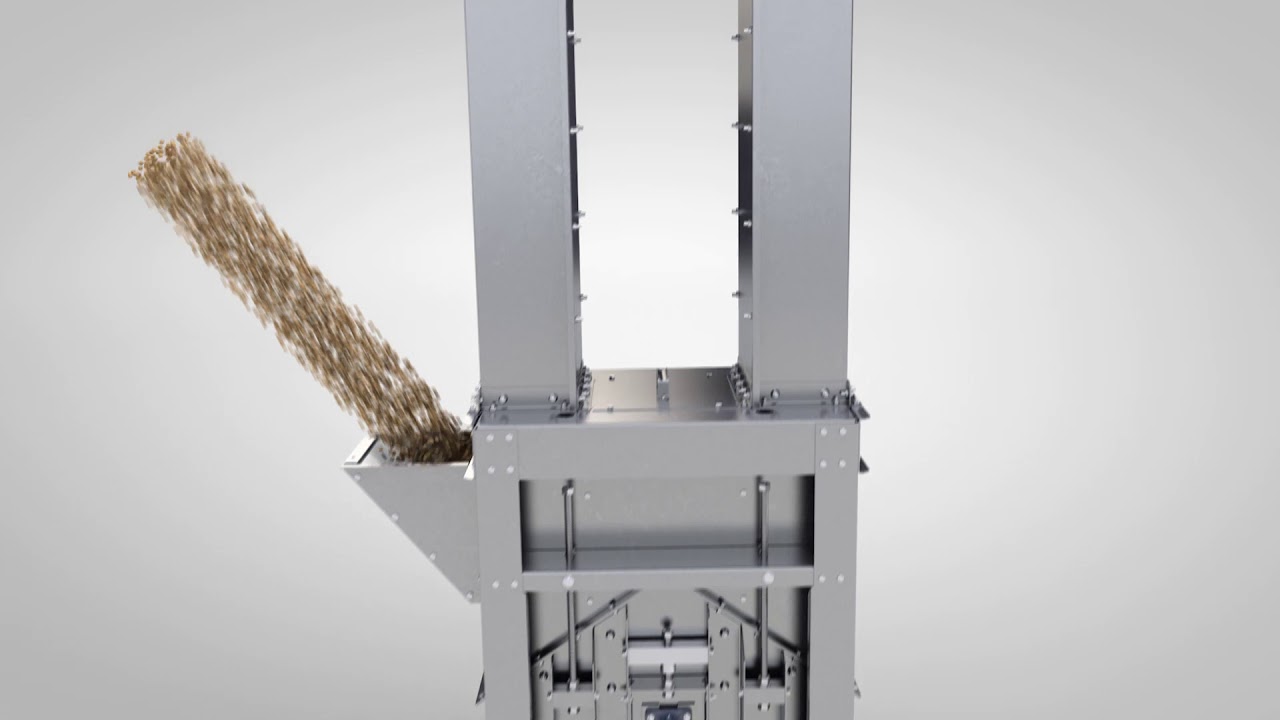
Ryson’s Bucket Elevators are designed for heavy-duty operations and long lifespans. They can be delivered in powder-coated carbon-steel, stainless-steel or wet environment versions. Standard elevator sizes and capacities as well as custom designs for special applications.
This operation also makes continuous bucket elevators better https://sepmachinery.com/ suited for handling abrasive or sluggish material. The head section is designed and ruggedly constructed to withstand the torque of drive components, maintain alignment and to aid in maintenance. We fabricate the lower portion from 10 GA steel and the hood from 12 GA steel with a pressure relief door on the top of the leg as a standard feature.
Reference Chart for Grain Handling Solutions
The operator may also view cup fill through the standard inspection door. Light and bulky materials give better cup fill when fed on the down side. Our up side inlet location insures that material enters the cups at or above the pulley centerline. Bucket Conveyors and Elevators are ideal for moving pet food and pet treats to packaging lines.. Roller conveyors are a type of conveyor belt that allows objects to skate on its surface by using rollers, which are equally spaced revolving cylinders. Drain, flush, and replenish the oil supply if pollutants are found.
What is the difference between screw conveyor and bucket elevator?
Screw elevators tend to be more expensive than bucket elevators, but maintenance is generally less since they have less moving parts and are easier to service. They are also better suited for high heat applications since the auger is made of steel.
KWS designs and manufactures Bucket Elevators to meet the needs of many industries, such as Chemical, Minerals Processing, Food, Wood Products and Wastewater Treatment. The speed monitor mounts to the elevator boot shaft to detect slowdown in belt speed, indicating a plug situation. Available in single set point and dual set point, less control cable. As such, you can expect to face only minimal maintenance when working with our models. All our Bucket Elevator models have easily removable inspection covers and a conveniently located inspection window. The heavy gauge inspection section allows full access to the front and back of belt and cups.
Standard crowned boot pulleys are available in either drum or wing style. Cut-outs are located on both up and down sides with a boot pocket installed on the up side and bolted cover plate on the down side as standard. Clean-out doors on both ends of the boots are also standard features.

We have done pioneering work in the field of high performance bucket elevators. The development of high quality continuous steel cord belts, as well as the bucket fastenings make it possible to build equipment capable of handling material flows of 2,000 m3/h and more. Centrifugal bucket elevators are chosen when there is a need to move large amounts of material quickly. Instead of direct loading, buckets serve as the loading apparatus, scooping material up from the boot or inlet section. For this reason, durable buckets should be selected with this design.
Replace both if the chain or sprockets exhibit excessive wear or damage. The sprocket alignment, shaft alignment, and chain slack should also be checked to ensure that the correct drive alignment is maintained. For further details on this technique, consult the bucket elevator manual.
The head pulley, which bends to suit the pulley, must have a strong slide lagging. The belt is pulled around by proper slide lagging, which has strong traction, preventing the belt from slipping. The user must have a crown on the head pulley and boot pulley, which enables the belt to track in the middle of the pulley, in addition to good lagging and belt tension. One of the bucket elevator's most crucial components is the belting. Therefore users must make sure they have the right belt for their application. Belts need, for instance, to be static-conductive, oil-resistant, and flame-retardant in the grain sector.
PPM Technologies bucket elevators are designed to elevate a wide range of dry, free-flowing products, including nuts, snack foods, cereals, pet foods, confectionary products and more. PPM’s bucket elevators can be constructed with either an open tubular frame or with sanitary solid wall plates – material options include both stainless-steel or carbon (mild) steel. We offer unmatched industry experience and are proud to note that many of our conveyors are still in operation more than a half-century after delivery. MHE custom designs bucket elevators based on each client’s specific job requirements, thus effectively reducing the costs incurred from purchasing mass-produced equipment with superfluous features.
The chain should also be immersed in a nonflammable solution to flush out debris, grime, or water that may have built up inside the bushings, rollers, and sidebars. Competent engineering, fast and reliable on-site service as well as optimal spare parts supply round out our offering and ensure high reliability of the systems. KWS provided a unique design for the growing pyrolysis industry that met the tight space constraints of the plant and for easy installation and maintenance. Heavy-duty slide lagging (SOF Style 5) slides into retainers which are welded onto the pulley.